A preview of how we'd approach it.
Earth on Board is an international ecosystem for sustainable governance, founded and led by Philippe Joubert, former Deputy CEO of Alstom. Where most players speak to CSR teams or operational staff, you speak to the one level that actually decides: the board. Your mission is to grow “Earth Competent Boards” — boards genuinely equipped to treat sustainability as strategy, not decoration — through a tailored programme built with the Cambridge Institute for Sustainability Leadership. And in Southeast Asia, you are already on the ground: in 2024 you co-authored the Guide on Climate Action for Boards in Southeast Asia with ClientEarth and Climate Governance Malaysia.
Your angle is legal and fiduciary as much as ecological: you don't moralise, you remind directors that protecting the company over the long term is part of their duty. That credibility comes from Philippe Joubert's own track record — an industrial leader who ran tens of thousands of people before becoming one of the world's leading voices on the subject. He talks to directors as a peer, not as a campaigner. In a region as exposed as Southeast Asia, that peer-to-peer stance is exactly what makes boards listen.
A board can no longer say “we didn't know” — ignoring sustainability risk is now a governance failure. Short-term financial performance is an illusion: a company cannot thrive in a world that fails. Sustainability competence has to be built into governance itself, not delegated to a department. And the fastest lever for change is directors talking honestly to other directors.
Directors, chairs and non-executive directors of Southeast Asian companies — issuers listed on SGX and Bursa Malaysia, large Indonesian, Thai and Philippine family conglomerates, regional state-owned enterprises, and the region's institutional investors. Senior profiles, often holding several mandates, used to power and performance but rarely trained specifically on climate — in a region where governance is still often concentrated in founding families or the state.
Regulatory pressure is arriving fast, and from the top. Singapore requires Scope 1 and 2 emissions disclosure from 2025, Malaysia applies IFRS S1/S2 standards from the same year. Directors have to sign off on climate reports they don't master, on risks they were never trained to assess, in groups where the subject has never reached the board. They lack the time, the tools, and a framework that speaks their language — risk and business, not activism.
That sustainability is a compliance matter to hand to the CSR or audit function, a cost imposed by distant regulators, or a “Western” theme with little relevance to Asia. That their legal responsibility stops at the financial statements. That the region's assets — coal, fossil energy, coastal real estate, agriculture — are worth tomorrow what they are worth today. That ASEAN's fast growth shields it from climate shocks, when it is in fact one of the first victims.
Reminders of legal and fiduciary responsibility now that reporting is mandatory (“you sign it, so you're on the hook”). Figures that hit the regional economy directly — up to 35% of ASEAN GDP at risk by 2050, rising seas, stranded coal assets. Contrarian takes on false solutions, like net-zero pledges that don't hold up. And blunt views from a peer who has run large industrial groups and already knows the Southeast Asian ground.
The topics you are about to discover weren't pulled out of a hat. They are the result of a systematic research process designed to maximise the impact of every video on your audience of directors.
Each axis was tailored specifically to the world of board governance and corporate sustainability:
Each topic is scored out of 25 points across 4 criteria that measure its potential to perform on social media.
Does the hook stop the scroll in the first three seconds?
Will people react, comment, weigh in?
Will someone share this video with a peer or a colleague?
Is it educational or actionable enough to be worth keeping?
A score out of 25 that captures each topic's potential before production.
Click a topic to expand it and see the proposed hooks.
The topics and hooks above will be turned into scripts ready to be read on camera. Here are three examples, written to give you a concrete preview of the final result.
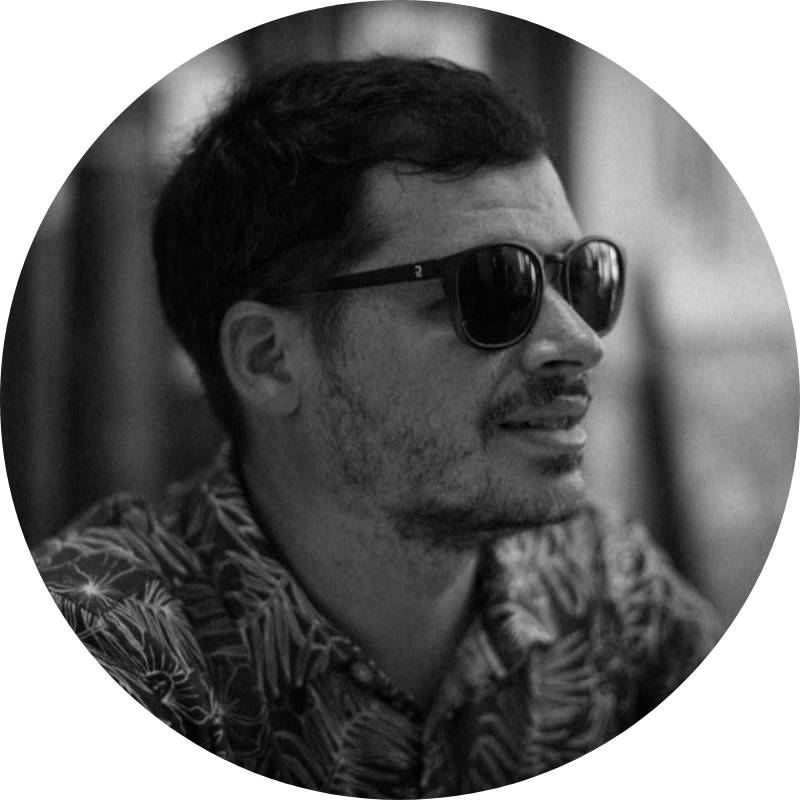
Your tone: A grave but accessible expert voice, action-oriented, unapologetically plain-spoken. Philippe Joubert, filmed in three-quarter view, talking to an off-camera interviewer — as if explaining to a peer, not preaching to a camera. The tone of a former top executive who has sat on boards himself and speaks to directors without corporate hedging.
Each script is written to be read naturally, like a conversation — not a corporate statement. No unexplained jargon, no empty phrases, no call to action.
These scripts were written imagining Philippe Joubert in front of the camera. It's a working hypothesis — we'll decide together, in a meeting, on the format that fits you best.
Starting this year, in Singapore and Malaysia, the climate figures in your annual report carry your board's signature. Most directors approved that process without realising it's now their own name sitting on the risk.
For most of my career, the annual report was the finance team's job. The board read it, asked a few questions, signed it, moved on. Climate wasn't even in it. That's over. In Singapore, from this year, every listed company has to put its emissions inside that report. Malaysia is doing the same thing, with the international standards. And here's the part most directors haven't sat with: that report is approved at board level. Their level. So let me say it plainly. You are now putting your name next to a set of climate numbers. Numbers about your energy, your supply chain, your exposure. And in most boards I talk to, nobody around that table could actually defend those numbers if someone pushed back hard. That's the real shift. It isn't that you have to report. It's that reporting turns a vague topic into a signed statement. And a signed statement is something a regulator, an investor, or a court can hold you to later. I've watched directors treat this as a box to tick. Hand it to the sustainability team, approve the document, next item. That is exactly the mistake. When you sign, you're not approving someone else's homework. You're taking personal responsibility for whether it's true. And the thing is, this cuts both ways. A board that genuinely understands its own numbers is a board that can't be ambushed. The exposure only exists if you're signing something you don't understand. So before the next report goes out, the question isn't “is it ready”. It's “could I defend every figure in here if I had to”. If the answer is no, that's not a reporting problem. That's a governance problem, and it has your name on it.

The moment sustainability comes up in a board meeting, half the room quietly files it under “ethics”. That is exactly the mistake — because it's the most concrete risk management there is.
I've sat in a lot of board meetings where the word “sustainability” gets said out loud. And you can feel the room shift. Half the people file it under ethics. The other half file it under communications. Almost nobody files it where it actually belongs, which is under risk. That's the whole misunderstanding. And in this region, it's an expensive one. Let me give it to you the way I'd give it to any board I've run. A factory that runs out of water isn't an ethical problem. It's a stopped production line. A supply chain built on a crop that fails in a heatwave isn't a moral issue. It's a hole in your revenue. An asset that new regulation turns worthless isn't about being green. It's a write-down on your balance sheet. None of that is about values. It's about whether the company is still standing in twenty years. And the reason it bites harder here is that the risk isn't theoretical in Southeast Asia. The water, the heat, the new reporting rules — they're arriving faster here than almost anywhere on Earth. So a board that treats this as a values debate is busy arguing about morality while the actual risk walks straight through the front door. I'm not asking anyone to become an activist. I ran heavy industry for a living. I'm asking directors to do the thing they're already good at. Take a serious risk, put a number on it, and manage it. The day a board stops asking “do we care about this” and starts asking “what does this cost us, and when” — that's the day it starts doing its actual job.
Ask any director what a board is for, and you'll get some version of the same answer: to see the risks management can't, or won't. So how is the water rising around your own headquarters not on a single agenda?
Ask any director what a board is actually for, and you get the same answer in different words. To oversee. To see the risks the management team can't see, or would rather not look at. So here's a question I like to put to boards in this region. The city your headquarters sits in — is it sinking? For a lot of them, the honest answer is yes. North Jakarta could be almost entirely under water by 2050. Up to a third of Bangkok. Manila is going down about ten centimetres every year. These aren't forecasts from a campaign group. They're measurements. And yet, when I look at the agenda of those same boards, none of this is on it. Not as a risk line. Not as a committee item. Not anywhere. Sit with what that means. The single most physical, most visible, most measurable risk to the company — the actual ground under the building — and the one body whose entire purpose is oversight has never once put it on the table. That's the part a director should lose sleep over. Not the water. The blind spot. Because a risk you've never named is a risk you've never managed. And when it shows up — the flooded site, the supply route that's gone, the insurer who won't renew — “we didn't see it coming” is not a defence a board gets to use anymore. Not when the data sat in public for twenty years. So I don't ask boards to care about the climate. I ask them one thing. Open your risk register. If the city you operate in is sinking and it isn't in there, then the problem was never the water. It was the oversight.
Alongside the interview videos, these dynamic formats vary the content and reach new audiences.
Extensive online research to identify the topics that generate views in your sector. Trend analysis, competitive benchmarks, scoring of each topic. The result: a tailor-made content strategy built on the strongest subjects.
One day of filming (your offices, our Lyon studio, or a private venue). A professional crew: videographer, two 4K cameras, LED lighting, lapel mic. Teleprompter provided → 40 to 60 videos filmed in a single day, of which 24 to 36 are publishable after editing and selection.
Short-form editing specialists. Animated subtitles, effects, B-roll. First videos ready to post within one to two weeks.
Simultaneous publishing across every network: TikTok, Instagram Reels, YouTube Shorts, LinkedIn, Facebook Reels. One shoot = five viral streams.
Builds your editorial strategy, writes your scripts, and will be your main point of contact throughout the project.
Directs the shoot and captures your takes
Turns the rushes into punchy videos
Manages publishing and optimisation of your content across all your networks
40M organic views in 1 year · 30K Instagram followers · Views ×30 · Top 5 wine & spirits accounts in France
25M organic views in 6 months · 28K Instagram followers · Views ×20 · No.1 in views/month in high-end hairdressing
From 0 to 10,000 followers in 6 months · 2M+ views · More views than the CGT France account · A reference on labour law in transport
No commitment
Generating millions of organic views on social media isn't something everyone can do. And it isn't only a matter of platform expertise. However good you are at your craft, nothing takes off if the subject has no substance, no tension, no truth worth defending.
That's why we choose carefully the leaders and companies we reach out to. We know how to recognise a subject worth devoting months to.
Sustainable governance isn't just one more topic. It's a field where directors are asked to sign what they can't yet defend, where the most physically exposed region on Earth is still treated as a bystander, and where a clear voice can truly matter.
If what you've read resonates, we're here whenever you're ready.